
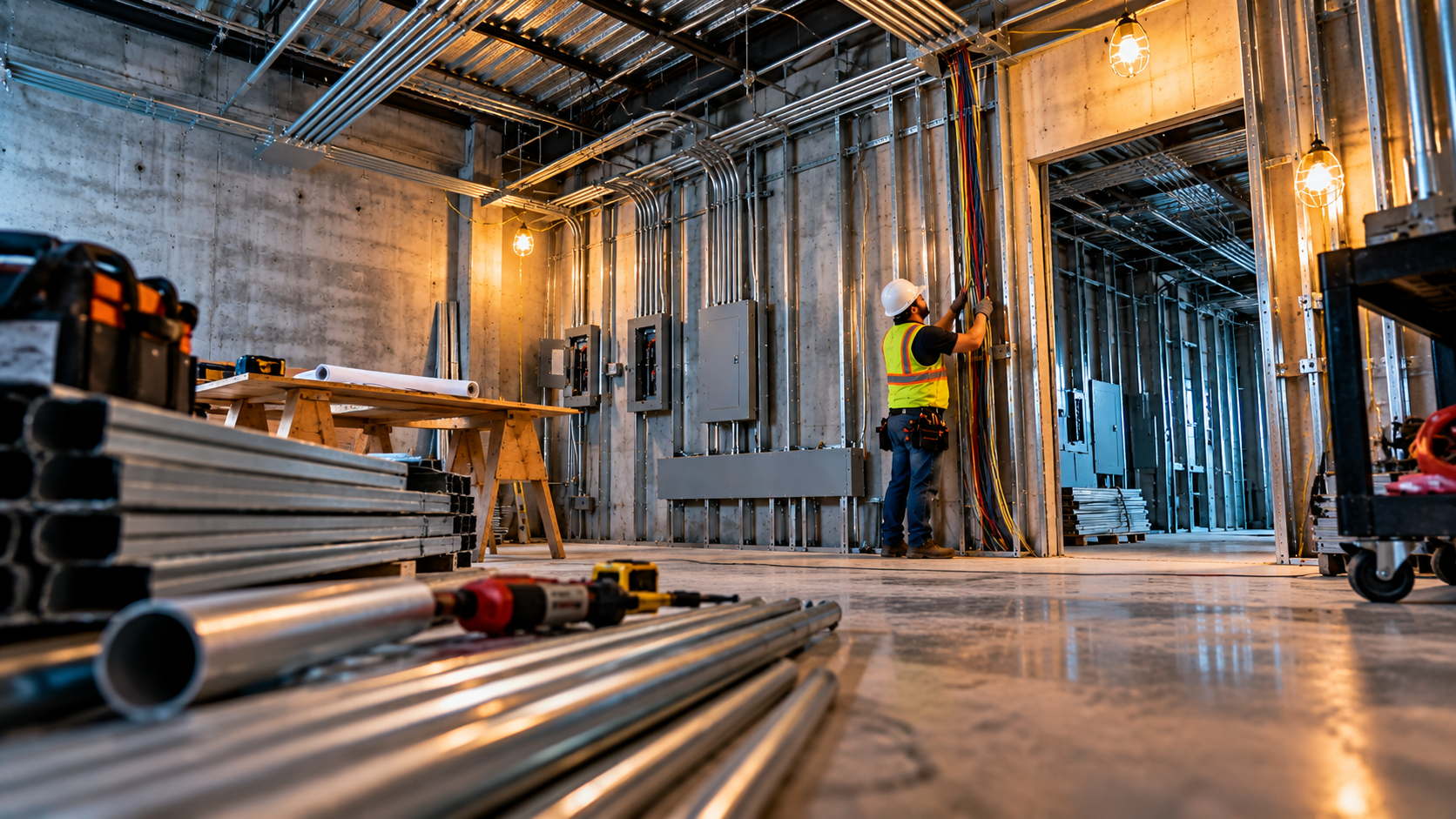
Chatsworth warehouse electrical planning shapes how well a distribution, manufacturing, or storage business runs from its first day. Chatsworth, in the northwest corner of the San Fernando Valley, holds a large share of the Valley’s industrial space along Nordhoff Street, Prairie Street, and Plummer Street. Aerospace shops, online sellers, film rental houses, and food makers all lease space here. Each one brings different machines, chargers, and work areas. Before racks go up, the power plan must fit how the tenant will work.
Warehouse tenants, facility managers, and builders can use the steps below to plan power that keeps operations moving.
Why Warehouse Power Needs Careful Planning
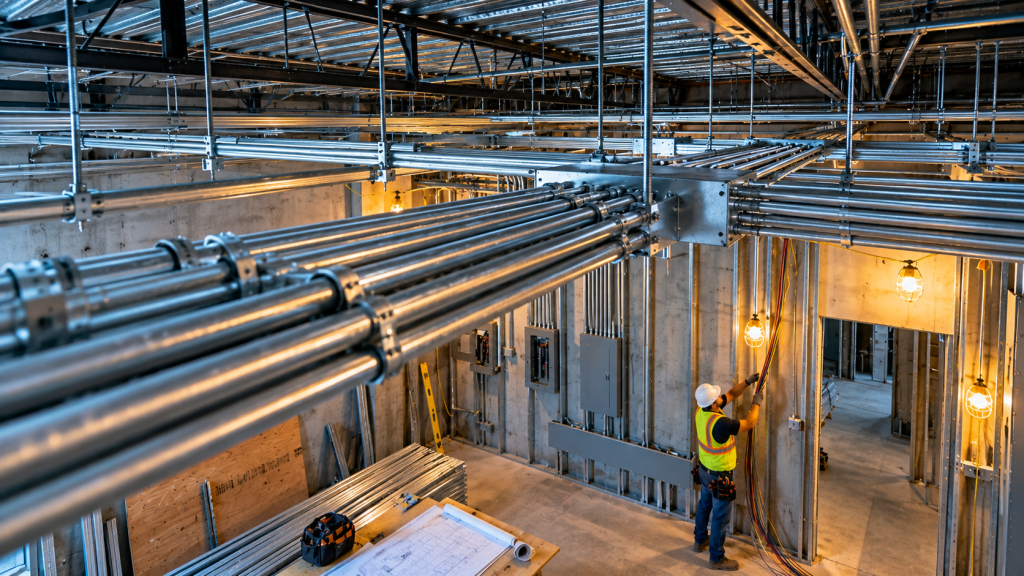
Warehouses look simple. Their power needs do not. A dry storage building may need little more than lights and a few outlets. A small factory, though, may run compressors, welders, belts, and CNC machines. Forklift chargers add heavy loads too. If the plan misses any of these, crews end up running long extension cords or tripping breakers. Good Chatsworth warehouse electrical planning avoids both.
Start Chatsworth Warehouse Electrical Planning With an Equipment List
First, list every machine and device the tenant will use. Note the volts, phase, amps, and plug for every item. Next, note where each item will sit on the floor. In addition, list office equipment, break room appliances, and HVAC units. This list becomes the foundation for load calculations and circuit layouts. Without it, Chatsworth warehouse electrical design is guesswork.
Checking the Building’s Service
Most Chatsworth industrial buildings have three-phase power, often at 208 or 480 volts. However, the service size varies from building to building. So an electrician compares the tenant’s total load to the existing service. If the numbers fall short, the tenant may need a service upgrade through LADWP, which supplies power in Chatsworth. Utility upgrades take time, so start that conversation early.
Chatsworth Warehouse Electrical for Machines
Heavy machines need dedicated circuits, often with a disconnect switch within sight of the equipment. Many run on three-phase power. Some also call for a special breaker or surge guard. So the electrician reviews each machine’s spec sheet before setting circuits. Placing drops at the right height and location keeps cords off the floor and workers safe.
Busway for Flexible Layouts
Production layouts change over time. Overhead busway lets the tenant plug machines in anywhere along a run. When equipment moves, the crew simply relocates a plug-in unit instead of pulling new wire. As a result, busway costs more up front but saves money on future changes. It works especially well for shops that add or rearrange machines often.

Forklift and Equipment Chargers
Electric forklifts, pallet jacks, and scissor lifts need charging stations. Chargers draw heavy power for hours, often overnight. So group them in a well-ventilated charging area with dedicated circuits. In addition, lithium and lead-acid batteries have different needs. Lead-acid areas may need eyewash stations and extra ventilation. Planning this zone early avoids crowded aisles later.
Chatsworth Warehouse Electrical and Lighting
Bright, even light keeps workers safe and productive. LED high-bay fixtures now replace older metal halide lamps in most warehouses. They turn on instantly, use far less power, and last for years. State code also asks for motion sensors and dimming near skylights. See the California Energy Commission for details.
Lighting Around Racking
Tall racking can block light and create dark aisles. So the lighting designer lays out fixtures along the aisles, not just in a grid. Aisle-specific optics push light down between racks. In addition, motion sensors in each aisle save energy when no one is working there. Good lighting makes picking faster and reduces errors. Bright aisles are safe aisles.
Work Area Power
Packing tables, work benches, and test areas need lots of outlets. Workers plug in label printers, scanners, tools, and laptops. So the plan should include outlet strips along benches and drops from above where needed. In addition, code calls for ground-fault protection near sinks or in wet areas. Comfortable, well-powered work areas keep crews efficient.
Chatsworth Warehouse Electrical at the Docks
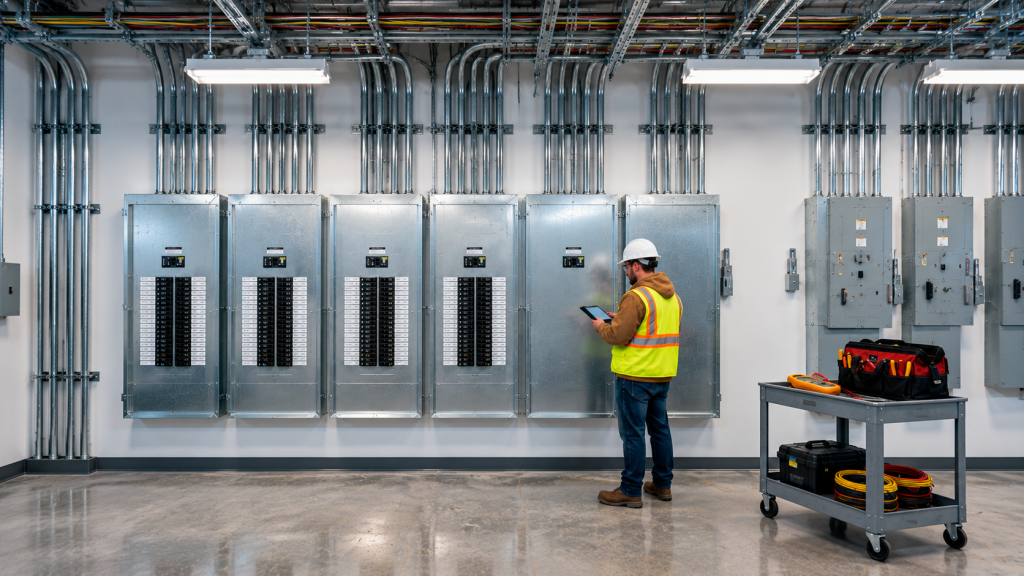
Loading docks need power for dock levelers, door operators, and dock lights. In addition, some tenants add outlets for refrigerated trailers. Exterior lighting around docks and parking areas improves safety at night. So the plan should include these items along with the interior layout.
Office and Break Areas
Most warehouses include a front office, restrooms, and a break room. These spaces need standard office power, data, lighting, and HVAC. In addition, break rooms need circuits for refrigerators, microwaves, and coffee makers. Planning these areas with the warehouse layout keeps the whole project in one coordinated set of drawings.
Chatsworth Warehouse Electrical Permits
Chatsworth sits within the City of Los Angeles. So LADBS reviews electrical plans and performs inspections. The drawings list the load math, panel schedules, and lighting controls. In addition, machine circuits and disconnects should appear on the drawings. Submitting complete plans speeds up review and avoids correction notices.
Safety and Code Requirements
Warehouses must follow strict safety rules. Panels need clear working space in front of them. Machines need proper disconnects and labeling. In addition, emergency lighting and exit signs must guide workers out during a power failure. Many of these rules come from the NFPA electrical code. Following them protects workers and passes inspection.
Future Growth
Businesses grow, and so do their power needs. So size panels with spare capacity and leave room for extra breakers. In addition, run empty conduit to areas where future machines might go. A little extra planning now saves costly upgrades later. Tell your electrician where you hope to be in five years.
EV Charging for Fleets and Staff
Many Chatsworth businesses now run electric vans or offer charging to employees. EV chargers draw significant power and need dedicated circuits. So include them in the load calculation from the start. Lay empty pipe out to the lot now, even if chargers come later. Trenching after paving costs far more.
Scheduling the Work
Electrical work usually starts with underground or overhead conduit, then panels and feeders, then branch circuits. Lighting and machine drops follow. Finally, the electrician terminates equipment and tests every circuit. Coordinating with racking installers matters, since racks can block access to ceiling work. See how the phases fit on our build-out electrical page.
Budgeting Chatsworth Warehouse Electrical
Price tracks building size, machine loads, lighting, and any service upgrade. A simple storage building costs far less than a production facility with busway and chargers. In addition, utility work can add significant cost and time. For rough numbers, check our pricing page.
Keep It Simple for Your Crew
Workers should never hunt for power. Put outlets where they work. Label every drop. Keep cords off the floor. Mark the panels so anyone can find a breaker fast. These small steps save time every shift. Short runs save money. Clear paths save time.
Tips for Warehouse Tenants
- Share a complete equipment list early
- Confirm three-phase service and capacity
- Use busway where layouts may change
- Plan a dedicated charging area
- Run spare conduit for future growth
Chatsworth Warehouse Electrical Checklist
- List machines, chargers, and office loads
- Check service size with LADWP
- Plan machine circuits and disconnects
- Lay out LED lighting along aisles
- Power work areas and docks
- Submit plans to LADBS
- Leave room for growth and EV charging
Power Your Warehouse for Success
A thoughtful electrical plan keeps machines running, aisles bright, and workers safe in a Chatsworth warehouse. With the right layout and capacity, your operation can grow without costly rewiring. Learn more on our Los Angeles electrical page, or reach out to plan your warehouse.