A Woodland Hills electrical estimate is only as good as what it includes. Woodland Hills, at the west end of the San Fernando Valley, is home to Westfield Topanga, The Village, Warner Center, and many strip centers along Ventura Boulevard. Retail tenants here range from big brands to local boutiques. When they plan a build-out, the electrical estimate often becomes one of the largest line items. If it leaves things out, costs climb later. Below is a list of what belongs in a complete, fair estimate that is easy to compare.
Retail tenants, landlords, and contractors will find a simple framework here for building or reviewing an estimate.

Why a Complete Estimate Matters
An estimate that looks cheap may simply leave out key items. For example, it may skip permits, lighting controls, or the sign circuit. Then those costs show up as change orders. In contrast, a complete estimate shows the true cost up front. It also lets you compare bids fairly. So a detailed Woodland Hills electrical estimate protects both the tenant and the contractor.
Start the Woodland Hills Electrical Estimate With Good Drawings
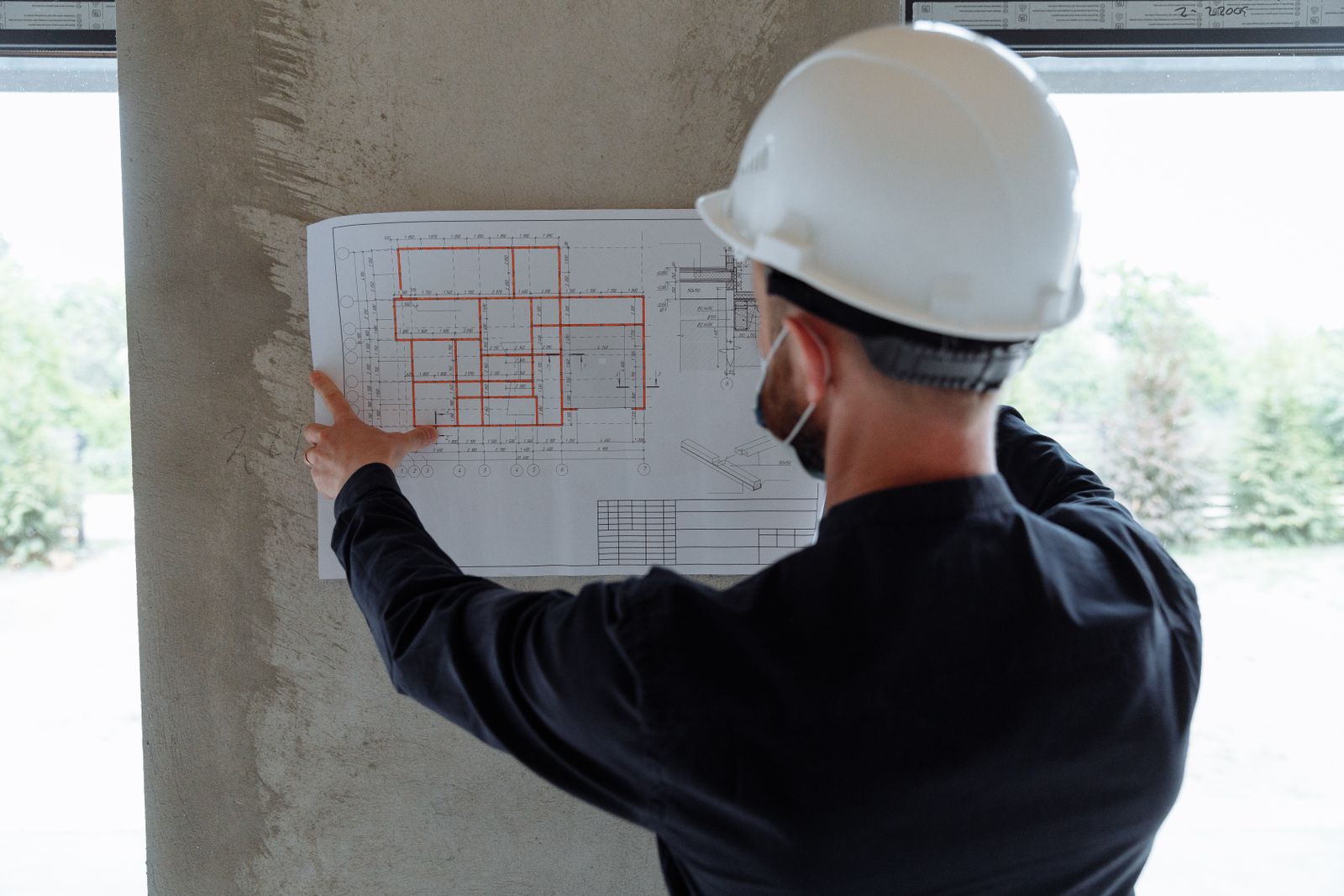
The estimate depends on the drawings. A floor plan, a reflected ceiling plan, and an equipment list are the minimum. Ideally, an engineer draws the circuits and panel schedules. Without these, the estimator must guess. So invest in good drawings before you ask for a Woodland Hills electrical estimate.
Existing Conditions in a Woodland Hills Electrical Estimate
The estimate should note what already exists. Is there a panel? How big is it? Are there working lights and outlets? A site visit by the estimator answers these questions. In addition, the estimate should say what will be removed or reused. Clear notes on existing conditions prevent arguments later.
Panels and Service in a Woodland Hills Electrical Estimate
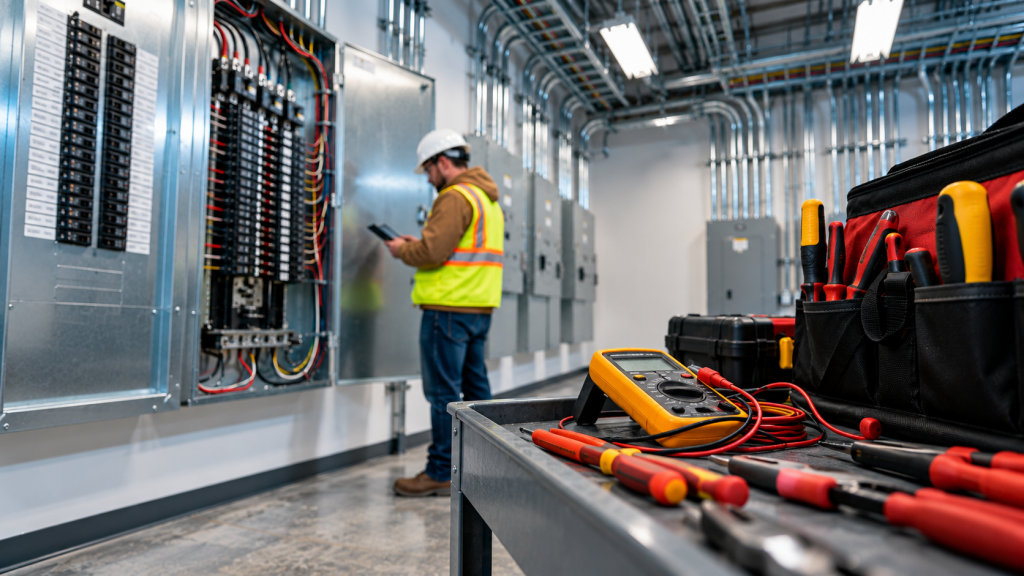
If the space needs a new panel or a bigger service, the estimate must include it. That means the panel, breakers, feeders, and any utility fees. In addition, if LADWP must upgrade a transformer or meter, the estimate should note who pays for that work. Utility work can be slow, so the estimate should flag that risk too. Visit LADWP for their commercial service process.
Lighting in Your Woodland Hills Electrical Estimate
Lighting is often the largest part of a retail electrical estimate. So list every fixture type, the quantity, and who supplies it. Some tenants buy their own fixtures, while others let the contractor supply them. Also, include every control the state energy code calls for, like motion sensors and time clocks. The California Energy Commission publishes these rules. Missing controls are a common cause of change orders.
Outlets, Data, and Point-of-Sale
The estimate should list every outlet, floor box, and data drop. Registers, display cases, lighted shelves, and back-office desks all need power. In addition, decide whether data cabling is part of the electrical bid or a separate contract. Our page on data cabling services explains what that work includes.
Security and Cameras
Many stores add cameras, door alarms, and anti-theft gates at the exit. These systems need power and, often, data cable. Sometimes the security company handles the wiring, and sometimes the electrician does. So the estimate should spell out who runs each cable. Clear lines prevent gaps at the end of the job.
Signs and Storefront Lighting
Exterior signs need a dedicated circuit and a timer. Window displays and storefront lights also need their own circuits. The sign company usually supplies the sign, but the electrician provides power. So the estimate should say exactly where the electrical scope ends and the sign scope begins.
HVAC and Equipment Connections
Rooftop HVAC units, exhaust fans, and water heaters need power connections. If the tenant adds or replaces these items, the estimate must include the wiring. In addition, specialty items like coffee machines or display coolers may need dedicated circuits. So share the full equipment list with the estimator.
Life Safety in a Woodland Hills Electrical Estimate
Exit signs and emergency lights are required in every store. The estimate should list how many and where. In addition, fire alarm work is often a separate contract. If so, the estimate should say so clearly. Life safety items are checked closely at inspection, so they must not be left out.
Permits, Plans, and Inspections
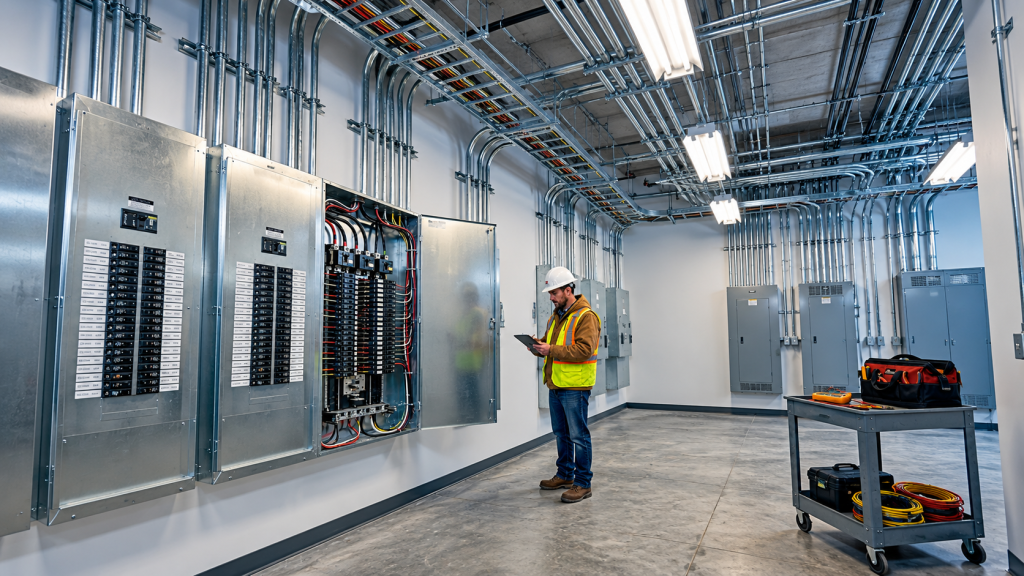
Like the rest of the west Valley, Woodland Hills gets its permits and inspections from LADBS. The estimate should state who pays permit fees and who prepares Title 24 energy forms. Also, malls and big centers often run their own plan review. Including these steps avoids surprise costs.
Mall Rules and After-Hours Work
Many Woodland Hills retail spaces sit inside malls or large centers. These centers often ask for night work, union crews, extra insurance, or contractors they approve. In addition, some malls charge fees for shutdowns or escorts. So the estimate should reflect the landlord’s rules. Ask for the tenant criteria packet before pricing.
Labor and Overtime
Labor is often half the cost of electrical work. So the estimate should show crew size and expected hours. If the mall requires night work, overtime rates apply. In addition, ask whether the price assumes one long push or several short trips. Extra trips add travel and setup time. Clear labor notes help you see where the money goes.
Allowances and Exclusions
Good estimates set aside money for items not yet picked, like decorative lights. They also list exclusions, which are items not included. For example, an estimate may exclude fire alarm work, data cabling, or utility fees. So read the exclusions in every Woodland Hills electrical estimate carefully. They tell you what other costs to expect.
Change Orders
Even with a great estimate, some changes happen. A landlord may ask for a new detail, or the tenant may add a display. So the estimate should explain how changes are priced. For example, it may list hourly rates and a markup on materials. Agreeing on this up front keeps change orders fair and fast.
Schedule and Closeout
The estimate should include a basic schedule showing rough-in, trim, and inspection. In addition, it should list closeout items like as-built drawings, panel labels, warranties, and a final walk-through. These items help you maintain the system later. Our page on build-out electrical work explains each phase.
Comparing Each Woodland Hills Electrical Estimate
With complete estimates, you can compare bids side by side. Check that each one includes the same scope, allowances, and exclusions. Also, look at schedules and warranties. The lowest price is not always the best value. To see if a bid looks reasonable, check our pricing ranges.
Easy Tips for Retail Tenants
- Get electrical drawings before asking for prices
- Ask for the mall’s tenant criteria packet
- Decide who supplies the light fixtures
- Read the exclusions line by line
- Compare bids on scope, not just price
Woodland Hills Electrical Estimate Checklist
- Base the estimate on clear drawings
- Note existing conditions and reuse
- Include panels, service, and utility fees
- List every fixture, control, and outlet
- Cover signs, HVAC, and equipment power
- Include exit lights and life safety
- State permits, mall rules, allowances, and exclusions
Plan Your Budget With Confidence
A complete electrical estimate turns a retail build-out into a predictable project. With every item listed and every rule covered, your Woodland Hills store can open on budget and on time. Visit our Los Angeles electrical page, or request an estimate from our team.