Queen Creek restaurant electrical planning has to keep pace with one of the fastest-growing towns in the East Valley. New neighborhoods keep filling in, and new restaurants follow close behind. Food halls, family diners, pizza shops, coffee bars, and fast-casual chains all compete for space in local centers. Every one of them depends on its kitchen. In turn, every kitchen depends on reliable power. If the electrical plan misses a fryer, a walk-in, or a dish machine, the opening can slip by weeks. This guide explains how to plan electrical tenant improvements around kitchen equipment.
Restaurant owners, chefs, designers, and general contractors will find a practical roadmap below.
Start With the Equipment Schedule
Every restaurant electrical plan begins with a list of equipment. This list is called the equipment schedule. It shows each item, its voltage, its amps or watts, and whether it needs single-phase or three-phase power. Most of the time, the kitchen designer makes it. Still, owners should read it with care. If one item is left off, its circuit may be left off too.
Common Kitchen Loads
Restaurants use many high-power items. Typical loads include:
- Fryers, griddles, and ovens, including electric or gas models with electric controls
- Walk-in coolers and freezers with compressors
- Reach-in refrigerators and prep tables
- Dish machines with booster heaters
- Hood exhaust and makeup air fans
- Ice machines, beverage systems, and espresso machines
Each one needs the right circuit size and protection.
Queen Creek Restaurant Electrical Capacity Review
Next, compare your total load with the space’s service. Many shell spaces have modest service. In contrast, second-generation restaurant spaces may already have strong power. So review capacity before you sign the lease. An electrician can calculate the load and tell you whether the service, panels, and transformer will work. This review is the first big step in Queen Creek restaurant electrical planning.
Three-Phase Power for Kitchens
Large kitchen equipment often runs on three-phase power. It delivers more power with smaller wires. Many commercial centers provide 208-volt three-phase service. However, some equipment needs 480 volts. If your equipment does not match the building, you may need a transformer or a service change. Check this early with your electrician and kitchen designer.

A Day in a Busy Kitchen
Think about a busy Friday night. The fryers run hot, and the grill is full. Back in the dish pit, the machine runs load after load. Meanwhile, the walk-in door opens again and again. All of this pulls power at the same time. If one circuit is too small, a breaker trips. Then the line stops, and food backs up. That is why the plan must count every load at its peak. Good planning keeps the kitchen calm, even on the busiest night.
Working With the Utility
If the service must grow, the utility gets involved. In Queen Creek, SRP serves most commercial customers. The utility reviews the request, designs the service, and sets the meter. This process can take weeks or months. So start early. A late utility upgrade is one of the most common reasons restaurants open late.
Queen Creek Restaurant Electrical for Hoods and Fire Suppression
Kitchen hoods remove smoke and grease. Each hood also links to the fire suppression system. If the system activates, it must shut off power or fuel to the cooking equipment under the hood. Electricians install shunt-trip breakers or relays to make this happen. In addition, hood fans and makeup air units need their own circuits and controls. This work requires close coordination with the hood installer.
Queen Creek Restaurant Electrical for Refrigeration
Walk-in coolers and freezers protect your food inventory. So their circuits must be reliable. Each compressor and evaporator usually needs its own circuit. Many owners also add alarms that warn when temperatures rise. Some choose backup power for refrigeration. Discuss these options with your electrician.
Keep It Simple for Your Staff
Your cooks should not have to think about power. So label each plug and each breaker. Put the panel where staff can reach it, but keep it clear of boxes. Show the team how to reset a tripped breaker. Also, post a short list of who to call if the power goes out. These simple steps save time when things go wrong.
Ground-Fault Protection in Wet Areas
Kitchens are wet places. So codes require ground-fault protection for many outlets in kitchen areas. This protection shuts off power quickly if current leaks to ground. As a result, it prevents serious shocks. However, it can also cause nuisance trips on some equipment. Your electrician will choose the right devices to balance safety and reliability.
Dish Area Planning
Dish machines often use booster heaters to reach sanitizing temperatures. Booster heaters draw a lot of power. In addition, the dish area may include disposers, conveyors, and hand sinks with instant hot water. So plan the dish area as its own zone in the Queen Creek restaurant electrical design.
Front-of-House Power and Lighting
The dining room matters too. Plan power for point-of-sale stations, menu boards, music, and TVs. Lighting sets the mood, so dimmable fixtures are popular. In addition, patio areas may need weather-rated outlets and lighting. Signs on the building also need power and timers.
Codes and Standards
Restaurant electrical work follows the National Electrical Code and local amendments. The National Fire Protection Association publishes the NEC and related fire safety standards for commercial kitchens. Inspectors check that circuits, grounding, and protection meet these rules before you open.

Permits in Queen Creek
The Town of Queen Creek reviews restaurant tenant improvement plans. The electrical drawings show the panel schedules, equipment connections, and load calculations. In addition, the health department reviews the kitchen layout. Coordinating both reviews keeps the schedule moving. Your general contractor and electrician will manage most of this process.
Queen Creek Restaurant Electrical Timeline
A typical restaurant electrical project follows these steps:
- Finalize the equipment schedule
- Check capacity and plan any service upgrade
- Design circuits, panels, and lighting
- Submit plans for permit
- Order panels and long-lead gear
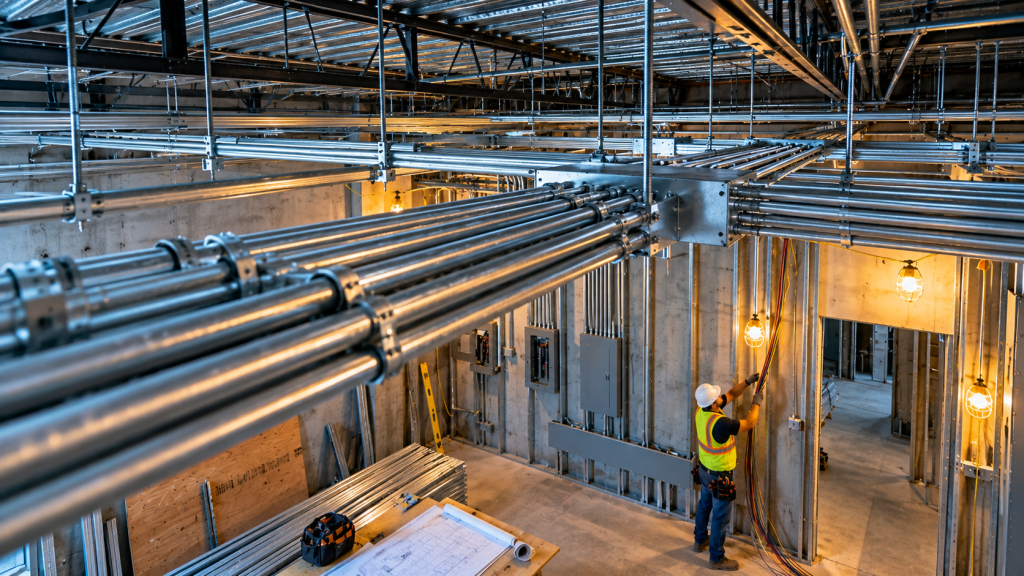
- Rough-in wiring and conduit
- Set equipment and make final connections
- Test the hood interlock and pass inspections
Most restaurant build-outs take two to four months.
Budgeting Queen Creek Restaurant Electrical Work
Power for the kitchen tends to eat a big slice of the build-out budget. Service upgrades, transformers, and three-phase power add the most. Equipment changes late in design also raise costs. So lock in the equipment list early. In addition, plan a contingency for surprises inside walls or ceilings.
Queen Creek Restaurant Electrical Tips for Owners
You do not need to be an electrician to help your project. Still, a few simple habits help a lot. First, keep one up-to-date list of all your gear. Next, tell your team right away if you swap a fryer or add a cooler. Then ask the electrician to show you the panel plan. Also, walk the kitchen with the crew before walls close. Look for plugs in the right spots. Finally, ask how each hood shuts off in a fire. These small steps make Queen Creek restaurant electrical work go smoothly. As a result, you open on time with fewer surprises.
Planning for Future Changes
Menus change. So do kitchen layouts. A few spare circuits and panel spaces give you room to grow. Adding them during construction costs much less than adding them later. Ask your electrician to leave capacity for future equipment.
Common Mistakes to Avoid
- Leaving items off the equipment schedule
- Ignoring voltage and phase requirements
- Starting the utility upgrade too late
- Forgetting the hood shutdown interlock
- Leaving no spare capacity for growth
FAQ on Queen Creek Restaurant Electrical
Does every restaurant need three-phase power?
Not every one. However, most full-service kitchens benefit from it.
Why do kitchen outlets trip so often?
Ground-fault protection can trip on some equipment. The right devices reduce nuisance trips.
How long does Queen Creek restaurant electrical work take?
Usually two to four months, longer if the service must be upgraded.
Power Your Kitchen
The right electrical plan keeps your kitchen running. Visit our restaurant electrician services, or book a kitchen power review today.