
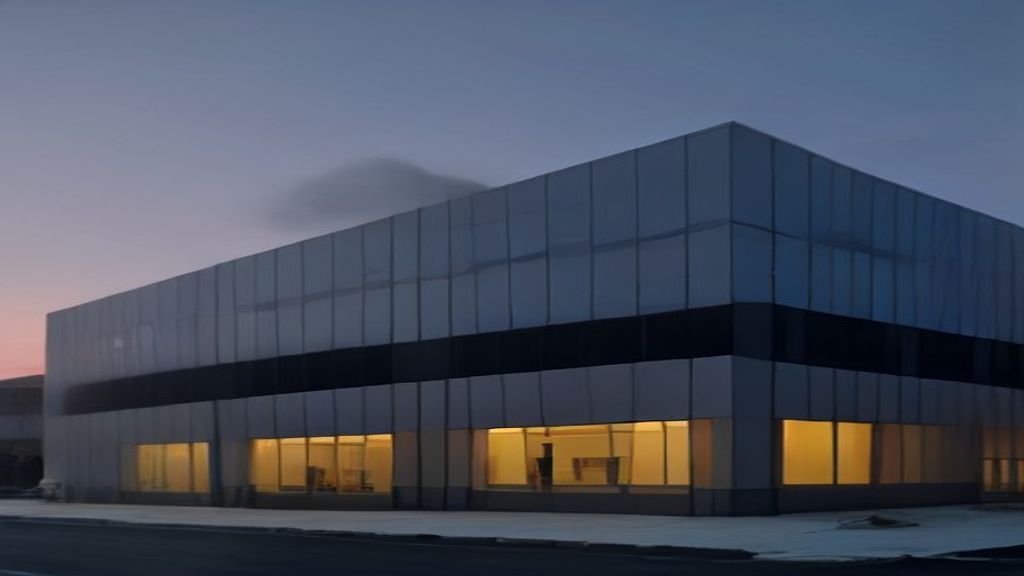
Old Town Scottsdale electrical work is a big part of any retail build-out in the district. Shops along Fifth Avenue, Main Street, and Marshall Way often sit in older buildings. Many of them have small electrical services. Their panels were never sized for modern retail. At the same time, today’s stores depend on bright display lighting, point-of-sale systems, security cameras, and strong Wi-Fi. Bridging that gap takes careful planning. This guide walks retail tenants and landlords through the key steps, so the build-out stays on budget and opens on time.
Retail owners, brokers, and property managers in Old Town can use it to set expectations before they sign a lease or hire a contractor.
Why Old Town Scottsdale Electrical Projects Are Unique
Old Town mixes historic storefronts with newer mixed-use buildings. Some shops sit in buildings from the 1950s and 1960s. Others sit on the ground floor below condos and offices. As a result, electrical conditions vary a lot from one address to the next.
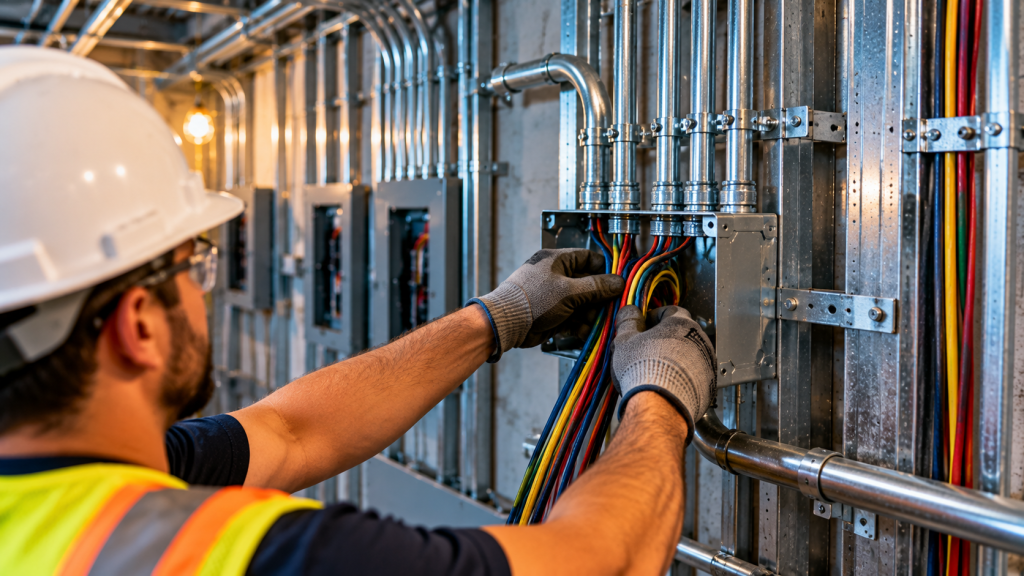
Older buildings often have limited power. Their panels may be full. Some wiring may not meet the current code. Newer buildings, by contrast, may have plenty of power. Still, landlords there often set strict rules for conduit routes and work hours. In either case, Old Town Scottsdale electrical planning starts with a clear look at what is already there.
Step 1: Check the Existing Service and Panel
First, confirm how much power the space has. A licensed electrician should check the service size, the voltage, and the number of open spaces in the panel. Many small retail suites have a 100-amp or 200-amp single-phase service. That may be enough for a boutique, but not for a store with heavy lighting, a coffee bar, or specialty equipment.
Next, the electrician runs a load calculation. This compares the planned lighting, outlets, HVAC, and equipment with the available capacity. If the numbers do not work, you may need a panel upgrade or a new service from the utility. Our article on panel capacity explains this step in more depth.
Step 2: Plan Retail Lighting
Lighting sells products. So it deserves careful planning. Most retail spaces use three layers:
- Ambient lighting for general visibility
- Accent lighting such as track heads that highlight displays
- Display lighting inside cases, shelves, and window displays
LED fixtures use far less power than older lamps, which helps when service capacity is tight. In addition, the energy code requires lighting controls, such as occupancy sensors, time switches, and separate control for display lighting. Plan these early, because they affect wiring and panel layout.
Step 3: Power for Displays, POS, and Security
Retail stores need power in specific places. Think about where registers, tablets, card readers, and receipt printers will sit. Also plan outlets for window displays, digital screens, and seasonal décor. Floor boxes may be needed for islands or display tables in the middle of the sales floor.
Security systems need power and data too. Cameras, alarm panels, and door access controls often run on low-voltage cabling. Coordinating these trades with the electrician avoids extra trips and patchwork later.
Step 4: Old Town Scottsdale Electrical Permits
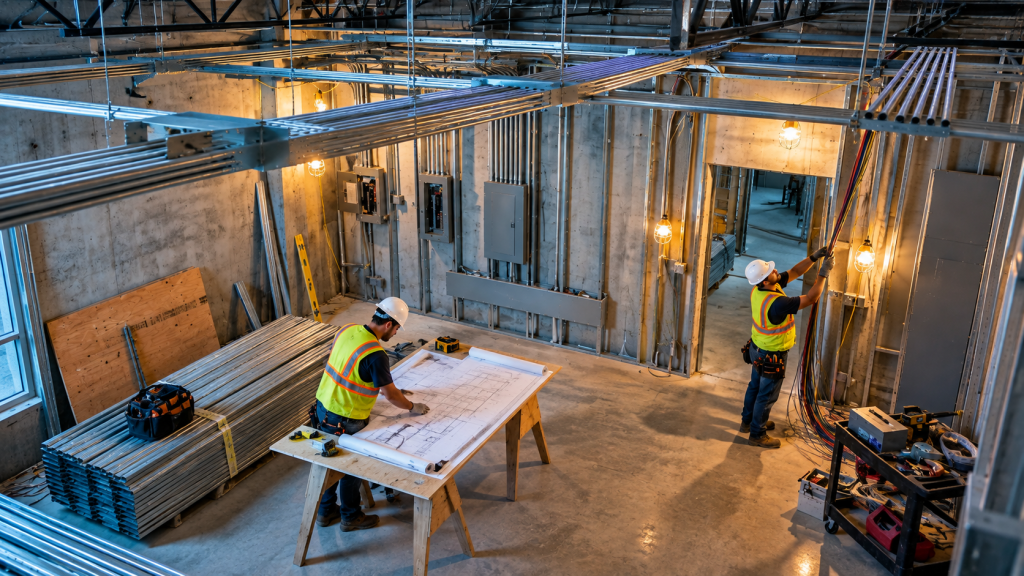
Most tenant improvements in Old Town need a building permit from the City of Scottsdale. Electrical plans usually include a lighting layout, a power plan, a panel schedule, and load calculations. Some buildings in Old Town also carry historic designations. In those cases, exterior changes such as new signs or storefront lighting may need extra review.
Plan time for plan review and inspections in your schedule. The City of Scottsdale website lists current permit steps and submittal rules.
Step 5: Work Around Neighbors and Foot Traffic
Old Town is busy, especially during spring training, art walks, and the winter tourist season. Sidewalks fill up, parking is tight, and neighboring shops want quiet hours. So plan deliveries, noisy work, and power shutdowns with care. In shared buildings, coordinate any outage with the landlord and neighboring tenants well ahead of time.
Step 6: Signs and Storefront Lighting
Exterior signs and storefront lighting help shoppers find you. However, they often need separate sign permits and must follow district design rules. The electrician will need a dedicated circuit for signs, usually controlled by a timer or photocell. Plan the sign location early, so the circuit and the mounting points are ready when the sign arrives.
Step 7: Inspections and Turnover
Inspections usually happen at two key points. First, a rough-in inspection checks wiring and boxes before walls close. Second, a final inspection checks fixtures, devices, panels, and labeling before the city approves occupancy. Once both pass, the store can stock shelves and open its doors.

Budgeting for Old Town Scottsdale Electrical Work
Costs vary with the size of the space, the condition of the building, and your design. Here are the main drivers:
- Service or panel upgrades
- The number and type of light fixtures
- Lighting controls required by code
- Outlets, floor boxes, and dedicated circuits
- Low-voltage cabling for data and security
- Signs and exterior lighting
- After-hours work in occupied buildings
Many leases include a tenant improvement allowance, so ask how much of the electrical scope it covers. Our guide to cost per square foot offers useful ranges.
A Simple Old Town Scottsdale Electrical Timeline
Every store is different. Still, most retail build-outs follow the same basic path. Here is what a typical timeline looks like.
- Early on (weeks 1 to 2): Walk the space, check the panel, and set goals.
- Next (weeks 2 to 4): Finish drawings and send them to the city.
- During review (weeks 4 to 8): Wait for plan review and order fixtures.
- After approval (weeks 8 to 11): Rough-in wiring, then pass the first inspection.
- Finally (weeks 11 to 13): Hang fixtures, set devices, and pass the final.
Of course, some steps can overlap. For example, you can order lights while the city reviews your plans. That saves time. On the other hand, a service upgrade can add weeks, because the utility sets its own schedule. So ask about it early.
Old Town Scottsdale electrical work also runs smoother when one person makes decisions. Pick a single contact on your team. Give that person the power to approve small changes. Then problems get solved in hours, not days.
Common Mistakes in Retail Build-Outs
- Signing a lease before checking the electrical capacity
- Choosing fixtures before planning lighting controls
- Forgetting outlets for seasonal displays and cleaning equipment
- Leaving low-voltage cabling until the end
- Underestimating permit and inspection time
Choosing an Old Town Scottsdale Electrical Contractor
Look for a licensed commercial electrical contractor with retail experience in Scottsdale. Every Arizona contractor needs a license from the state Registrar of Contractors (ROC). So ask for the number and look it up. Also ask for photos of past retail projects and references from local tenants. A team that knows Old Town buildings, landlords, and inspectors will save you time.
FAQ on Old Town Scottsdale Electrical Build-Outs
How long does a retail electrical build-out take in Old Town?
Small boutiques may finish in two to four weeks of field work. Larger stores or service upgrades can take longer, especially if the utility is involved.
Do I need a service upgrade?
Only if the load calculation shows the current service cannot handle your plan. A site visit answers this quickly.
Can work happen while neighbors stay open?
Yes. Crews can schedule loud work and shutdowns around neighboring businesses.
Plan Your Retail Build-Out
A clear electrical plan sets your store up for success. Visit our tenant improvement services page, or book a free walkthrough with our crew.