

Lemon Grove restaurant electrical work comes down to one big task: getting every piece of kitchen equipment connected safely, correctly, and on time. Lemon Grove is a small city in East County San Diego, known for its giant lemon statue and a friendly downtown along Broadway and Lemon Grove Avenue. Taquerias, bakeries, pizza shops, and family restaurants fill its strip centers and corner buildings. When a new restaurant moves in, the electrician must wire ovens, fryers, coolers, hoods, and more. This guide explains how to coordinate those equipment connections during a tenant improvement.
Restaurant owners, kitchen designers, and builders will find practical steps here to avoid costly delays.
Why Equipment Coordination Matters
Every piece of kitchen equipment has its own power needs. Some run on 120 volts, others on 208 or 240. Some need single-phase power, others three-phase. If the wrong outlet or circuit is installed, the equipment will not work. As a result, the crew must change the wiring, and the opening date slips. So coordination is the heart of Lemon Grove restaurant electrical work. It saves both time and money.
Start Lemon Grove Restaurant Electrical With the Equipment Schedule
The equipment schedule is a list of every item in the kitchen and dining room. It shows the make, model, voltage, phase, amps, and plug type. The kitchen designer or equipment dealer usually prepares it. Then the electrician uses it to design circuits and choose outlets. Without an accurate schedule, mistakes are almost certain.
Get the Spec Sheets
Each piece of equipment has a spec sheet from the maker. It shows where the power connection is, what type it needs, and how much space it requires. So collect these sheets for every item. In addition, confirm the final model before wiring starts. A last-minute swap from one fryer to another can change the power needs completely.
Lemon Grove Restaurant Electrical: Plugs or Hardwired?
Some equipment plugs into a receptacle, while other items are wired directly. For example, small coolers and mixers often plug in. Ovens, dishwashers, and water heaters are often hardwired. The spec sheet tells you which. In addition, plug types must match exactly. A mismatched plug means a delay while the right outlet is found.
Lemon Grove Restaurant Electrical for Cooking Equipment
Electric ranges, ovens, fryers, and griddles draw a lot of power. Many need 208-volt circuits with large breakers. In addition, some gas equipment still needs power for igniters and controls. So plan circuits for both electric and gas units. Place outlets or junction boxes where the equipment will sit, at the right height. Our page on restaurant electrical services covers common kitchen layouts.
Hood Systems and Fire Suppression
Above the cooking line, the hood pulls out smoke and grease. Its exhaust fan, makeup air fan, and lights all need circuits. Also, if the fire system goes off, it has to kill power to every appliance below the hood. That means the electrician must install shunt-trip breakers or contactors. Coordinate this with the hood and fire system installers early.
Lemon Grove Restaurant Electrical for Coolers
Walk-in coolers and freezers need power for their compressors, evaporators, and lights. The compressor often lives on the roof or behind the building, so the wire has a long way to go. Also, each reach-in and prep cooler gets its own outlet. Food safety depends on these systems, so they should be on dedicated circuits. That way, a tripped breaker elsewhere does not shut them down.
Dishwashers and Water Heaters
Commercial dishwashers often have booster heaters that draw heavy current. Electric water heaters also use a lot of power. So plan large, dedicated circuits for these items. In addition, check whether the dishwasher and booster share one connection or need two. The spec sheet holds the answer.
Lemon Grove Restaurant Electrical in the Dining Room
The dining room needs good lighting, outlets for host stands and POS stations, and power for music and TVs. In addition, patio heaters and outdoor lights need weather-rated circuits. California’s Title 24 code also sets rules for lighting power and controls. The California Energy Commission publishes these standards. Dimmable LED lighting helps set the mood for dinner service.
Checking Panel and Service Capacity
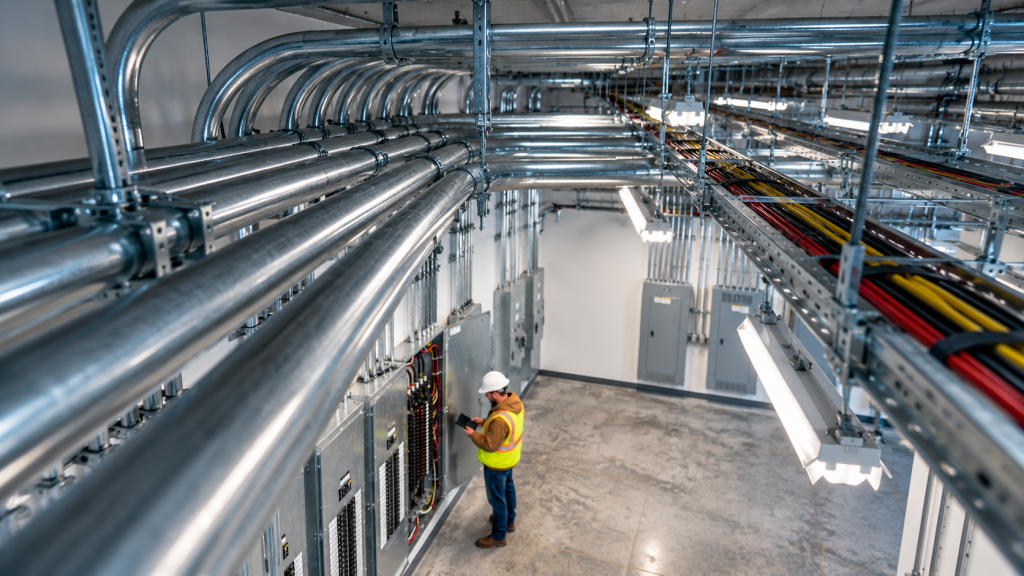
Restaurants often need much more power than the last retail tenant used. So the electrician totals every load and checks it against what the panel and service can carry. If the numbers fall short, a panel or service upgrade may be needed. In that case, contact SDG&E early, since utility work can take weeks or months.
Health Department and City Permits
Restaurant projects need several approvals. The county health department reviews the kitchen plan, including equipment and finishes. The San Diego County food facility program explains plan check steps. In addition, Lemon Grove’s building department issues electrical permits and inspections. The City of Lemon Grove site lists contacts and current fees.
Setting the Equipment
Equipment usually arrives near the end of the build-out. The crew sets each item in place, then the electrician makes the final connections. So the outlets and junction boxes must already be in the right spots. In addition, the plumber and gas fitter connect their lines at the same time. A coordination meeting before delivery keeps all three trades on the same page. It is the single best habit for Lemon Grove restaurant electrical work.
Small Kitchens, Big Loads
Many Lemon Grove spots are small. A taco shop or bakery may fit a full kitchen into a tight space. Yet small kitchens still use big loads. A single oven can draw as much power as a whole office. So do not judge the power needs by the size of the room. Count the equipment instead. Also, plan clear space in front of the panel. Code requires it, and staff should not stack boxes there.
Testing and Startup
After connections are made, each item must be tested. Factory technicians often start up hoods, coolers, and dishwashers. In addition, the fire suppression system is tested to confirm it shuts off power as designed. Inspectors may watch these tests. Passing them on the first try keeps the opening date on track. Ask the factory techs to show your staff how each item works, too.
Budgeting Lemon Grove Restaurant Electrical
Costs depend on the number of items, the size of the panel, hood controls, and refrigeration runs. Restaurants in former retail spaces often need major upgrades. So budget for a possible panel or service change. Our guide to electrical cost ranges helps with early planning.
Helpful Tips for Owners
- Lock in equipment models before wiring starts
- Collect every spec sheet in one folder
- Put coolers on their own circuits
- Hold a meeting before equipment delivery
- Plan for startup tests with factory techs
Lemon Grove Restaurant Electrical Checklist
- Build a full equipment schedule
- Collect spec sheets for every item
- Match plugs and hardwired connections
- Coordinate hood fans and shunt trips
- Plan dedicated circuits for refrigeration
- Check panel and service capacity
- Get health and building approvals
Open the Doors on Schedule
When the equipment schedule, spec sheets, and wiring line up, a restaurant build-out runs smoothly. With careful coordination, your Lemon Grove kitchen will fire up on opening day without surprises. For another local project, read about our North Park restaurant job, or ask our team for pricing.