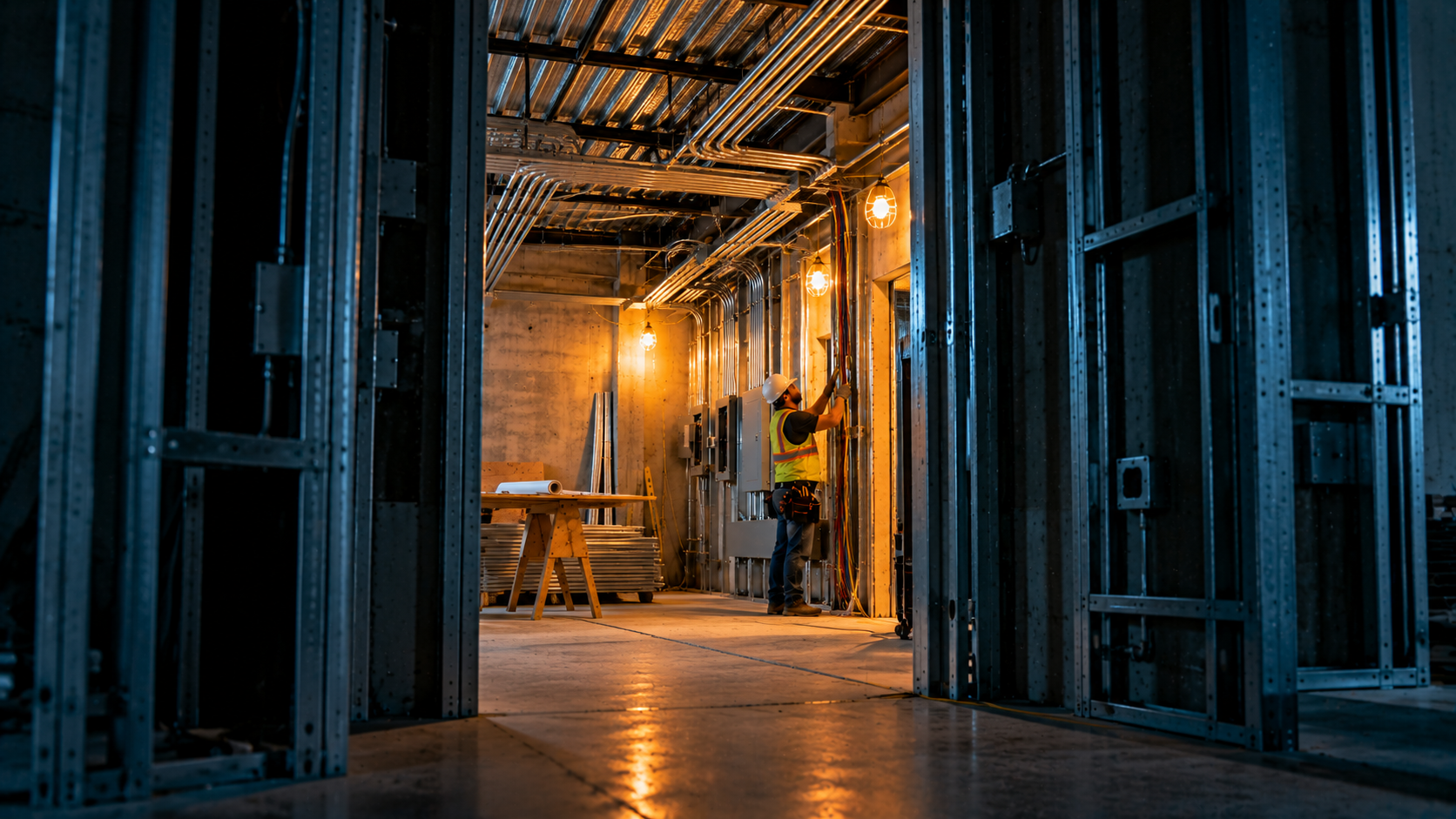
Enterprise restaurant electrical planning is about more than having enough power. It is about putting the right circuit in the right spot for every station in the kitchen. Enterprise covers a large part of the southwest Las Vegas Valley, from the I-15 corridor to fast-growing neighborhoods near Blue Diamond Road and the 215. New centers here fill up with taquerias, ramen shops, bakeries, sports bars, and family restaurants. Each kitchen has its own rhythm. So each needs its own circuit plan. This guide walks through kitchen circuits zone by zone.
Owners, chefs, kitchen designers, and contractors can use it to plan a kitchen that runs smoothly from the first service.
Think in Zones, Not Just Loads
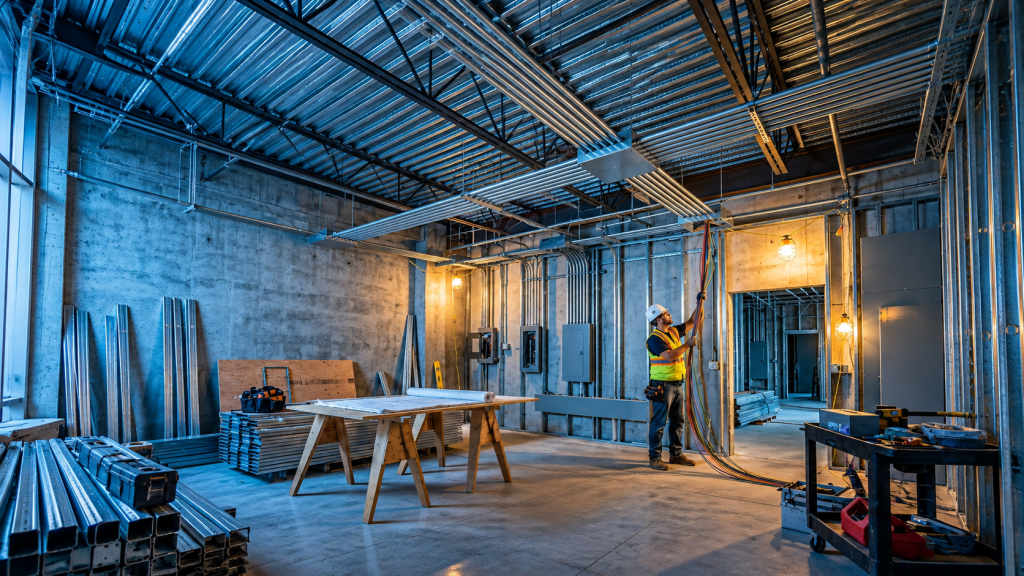
Most kitchens have clear zones. There is the cook line, cold storage, prep, dish, and the bar or front counter. Each zone uses power in a different way. For example, the cook line has heavy, steady loads. Cold storage runs day and night. Prep uses many small appliances. So plan circuits zone by zone. This approach makes the Enterprise restaurant electrical layout easier to build and easier to fix later.
Zone 1: The Cook Line
The cook line is where the heaviest power goes. Electric fryers, griddles, ovens, and induction ranges draw a lot of current. Even gas equipment often needs power for igniters, fans, and controls. So each piece usually gets its own circuit. In addition, many items need 208-volt or three-phase power. Check the nameplate on each unit. Then size each circuit to match.
Enterprise Restaurant Electrical and the Hood
Every cook line sits under a hood. The hood removes heat, smoke, and grease. It also connects to a fire suppression system. If that system fires, it must cut power to the equipment below. Electricians use shunt-trip breakers or contactors to do this. Meanwhile, the exhaust fan and makeup air unit need their own circuits and controls. This is one of the most important parts of Enterprise restaurant electrical work.
Zone 2: Cold Storage
Walk-in coolers and freezers protect thousands of dollars in food. Their compressors, evaporator fans, door heaters, and lights all need power. Most units need separate circuits for each part. In addition, reach-in coolers and prep tables line the kitchen. Each one needs a nearby outlet. Many owners add temperature alarms, so staff know right away if a cooler fails.
Zone 3: Prep Areas
Prep areas use many smaller tools. Mixers, slicers, food processors, blenders, and rice cookers all plug in here. So plan plenty of outlets above counters. Spread them across several circuits, so two appliances do not trip the same breaker. Also, outlets in prep areas need ground-fault protection, since water is always close by.
Zone 4: The Dish Area
The dish area often has the single biggest load in the kitchen. High-temperature dish machines use booster heaters to reach sanitizing temperatures. These heaters can draw as much power as several ovens. In addition, disposers, conveyors, and hand sink water heaters add more load. So treat the dish area as its own zone with its own panel space.
Zone 5: Bar and Front Counter
Bars and counters have their own needs. Ice machines, beverage coolers, draft systems, espresso machines, and blenders all need power. Point-of-sale terminals and receipt printers need clean, reliable circuits. In addition, menu boards and TVs need outlets near the ceiling. Plan these early, since they often sit inside custom millwork.
Enterprise Restaurant Electrical Panel Placement
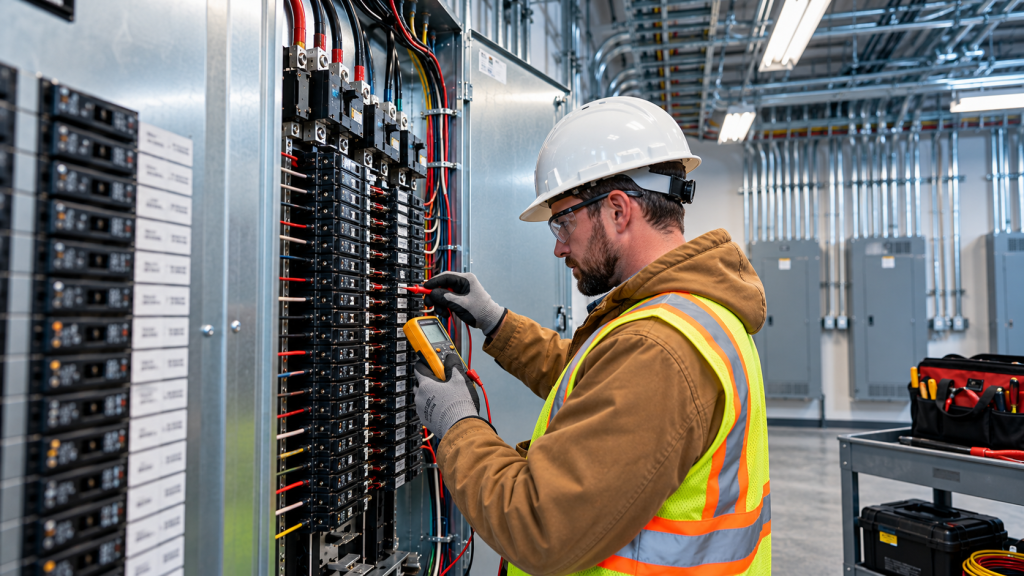
Where you put the panel matters. It should be close to the heavy loads to keep wire runs short. However, it must also have clear working space in front of it, as the code requires. Do not block it with shelves or boxes. Many kitchens use two panels: one for the kitchen and one for the dining room and lights. This setup keeps circuits organized.
Enterprise Restaurant Electrical Labels and Panel Directory
Clear labels save time during a busy shift. If a breaker trips, staff should know exactly which one to reset. So label every breaker with the equipment it serves. Also, label outlets with their circuit number. A clean panel directory is a small detail that makes a big difference.
Checking Service Capacity
Before final design, compare your total load with the building’s service. Many new centers in Enterprise provide good power. Still, a large kitchen can exceed what a typical suite has. If so, the service may need to grow. Clark County Building and Fire Prevention reviews these plans, and NV Energy handles any service changes. Start early, since upgrades take time.

Enterprise Restaurant Electrical Permits and Inspections
Enterprise has no city government of its own, so Clark County handles plan review and site visits. Your drawing set will list each panel, every hard-wired unit, and the total load. Separately, the Southern Nevada Health District checks the kitchen layout. Inspectors will also test the hood shutdown before you open.
Building the Kitchen Step by Step
- Lock in the menu and the equipment list
- Group equipment into kitchen zones
- Size circuits and pick panel locations
- Confirm service capacity with the utility
- Send drawings to the county
- Run conduit and wire by zone
- Set equipment and connect each unit
- Test the hood interlock and finish inspections
Most restaurant electrical work spans two to four months.
Enterprise Restaurant Electrical Budget Tips
The kitchen often drives the electrical budget. Heavy equipment, booster heaters, and hood controls add the most cost. Late equipment changes also add cost, since circuits may need to be redone. So finalize the menu and equipment early. In addition, leave a few spare circuits for future items. Adding them now is much cheaper than adding them later.
Enterprise Restaurant Electrical for Takeout and Delivery
Many Enterprise restaurants do a big share of their sales through takeout and delivery apps. That changes the front of the house. You may need a pickup shelf with heat lamps. Tablets for each app need charging spots. A label printer and a second register may sit near the door. So plan a small cluster of outlets at the pickup zone. Also, give it its own circuit, so a busy rush does not trip the line. This is a small but important part of Enterprise restaurant electrical planning today.
Simple Habits for a Calm Kitchen
Small habits keep the power steady. First, do not plug two big tools into one outlet. Next, keep cords off wet floors. Then clean the hood filters often, so fans do not strain. Also, report any warm plug or buzzing breaker right away. Finally, keep the panel area clear at all times.
Common Mistakes to Avoid
- Planning by total load instead of by zone
- Underestimating the dish machine booster heater
- Putting too many prep appliances on one circuit
- Blocking the panel with storage
- Skipping clear breaker labels
FAQ on Enterprise Restaurant Electrical
Which kitchen zone uses the most power?
Often the cook line or the dish area, especially with a booster heater.
Why does the hood need to cut power?
If the fire system activates, power to cooking equipment must shut off to stop the fire from spreading.
How long does Enterprise restaurant electrical work take?
Plan on a season, roughly eight to sixteen weeks, and longer if the service must grow.
Plan Your Kitchen Circuits
Planning by zone gives every station steady power. See our restaurant electrical services, or talk to our Las Vegas electricians today.