
A new electrical system is one of the biggest investments in any commercial project. Done well, it powers your business safely for decades. Done poorly, it causes delays, failed inspections, and costly rework. Understanding each phase of commercial electrical installation San Diego projects follow helps owners plan budgets, set realistic schedules, and ask the right questions. This guide breaks the process into clear steps, from early design to final sign-off.
Phase 1: Planning and Site Assessment
Every installation starts with a clear picture of the site. First, the electrical team reviews the building, the existing service, and the owner’s goals. In a new building, they look at utility availability and the planned layout. In an existing building, they check panel capacity, wiring condition, and available space.
This phase also includes an equipment list. Owners should share details on every major load, such as HVAC units, kitchen gear, lab equipment, or EV chargers. The more information the team has early, the more accurate the design will be.
Phase 2: Design for Commercial Electrical Installation in San Diego
Next, an electrical engineer or a design-build contractor prepares drawings. These include power plans, lighting layouts, panel schedules, single-line diagrams, and load calculations. In California, lighting designs must also meet Title 24 energy rules. So the drawings include compliance forms and control strategies.
Design choices affect cost and performance for years. For example, placing panels close to major loads shortens feeder runs and saves money. Choosing efficient fixtures lowers energy bills. In addition, leaving spare capacity makes future changes easier. Our page on Division 26 electrical contracting explains how design and specifications fit together.
Phase 3: Permits and Plan Review
Once drawings are ready, the team submits them for permits. In the City of San Diego, the Development Services Department reviews commercial electrical plans. Nearby cities and the County run their own reviews.
Typically, reviewers check code compliance, load calculations, and energy forms. If they have comments, the design team revises the drawings and resubmits. Unfortunately, each round adds time. Therefore, complete and well-coordinated drawings are the fastest path to approval.
Phase 4: Submittals and Procurement
While permits are in review, the contractor prepares submittals. Simply put, these are product data sheets for panels, fixtures, devices, and other equipment. The engineer and owner review them to confirm they match the design.
After approval, the contractor orders materials. However, lead times vary widely. Standard devices may arrive in days. However, switchgear, transformers, and custom fixtures can take months. So it pays to release long-lead orders as early as possible. Good commercial electrical installation San Diego teams track every order and flag delays right away.
Phase 5: San Diego Installation Rough-In
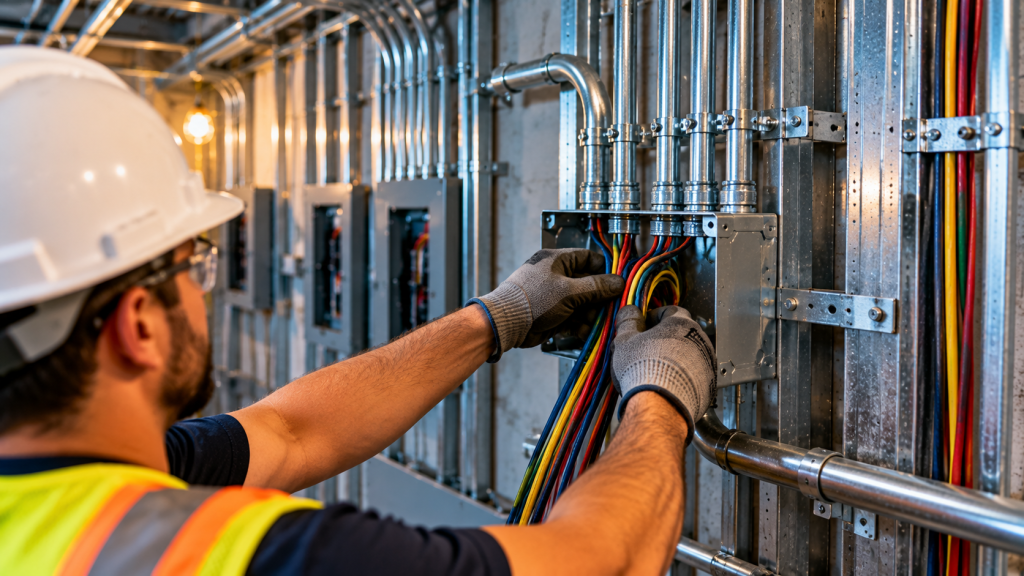
With permits issued and materials arriving, field work begins. During rough-in, for example, electricians install conduit, boxes, and supports. They pull wire, set panels, and run feeders. In addition, they rough in pathways for data, security, and fire alarm systems.
Coordination is critical at this stage. Ceilings and walls fill up quickly with ducts, pipes, and sprinkler lines. Regular coordination meetings help each trade find its space. In buildings near the coast, crews also use corrosion-resistant materials where the design calls for them.
Phase 6: Rough-In Inspection
Before walls and ceilings close, an inspector checks the rough-in. Specifically, they review wire sizes, box fill, grounding, conduit support, and fire-rated penetrations. If everything passes, drywall and ceiling crews can move forward.
Failed inspections cost time. That is why experienced crews perform their own internal checks first. They fix small issues before the inspector arrives. As a result, most rough-in inspections pass on the first visit.
Phase 7: Trim-Out for San Diego Commercial Installations
After finishes are complete, electricians return for trim-out. First, they install light fixtures, switches, outlets, and cover plates. They also connect equipment such as HVAC units, water heaters, kitchen appliances, and lab instruments.
Lighting controls are set up during this phase. Occupancy sensors, daylight controls, and dimming systems must be programmed. For more on this topic, visit our page on commercial lighting and controls.
Phase 8: Testing and Acceptance
Testing confirms that the commercial electrical installation in San Diego works safely and as designed. Crews test insulation, verify circuits, and check grounding. For larger systems, they may perform torque checks and infrared scans.
In California, many lighting control systems also require acceptance testing. A certified technician confirms that sensors, timers, and daylight controls operate correctly. The results go to the inspector before final approval. Planning for this step avoids last-minute delays in commercial electrical installation San Diego projects.
Phase 9: Final Inspection and Utility Energization
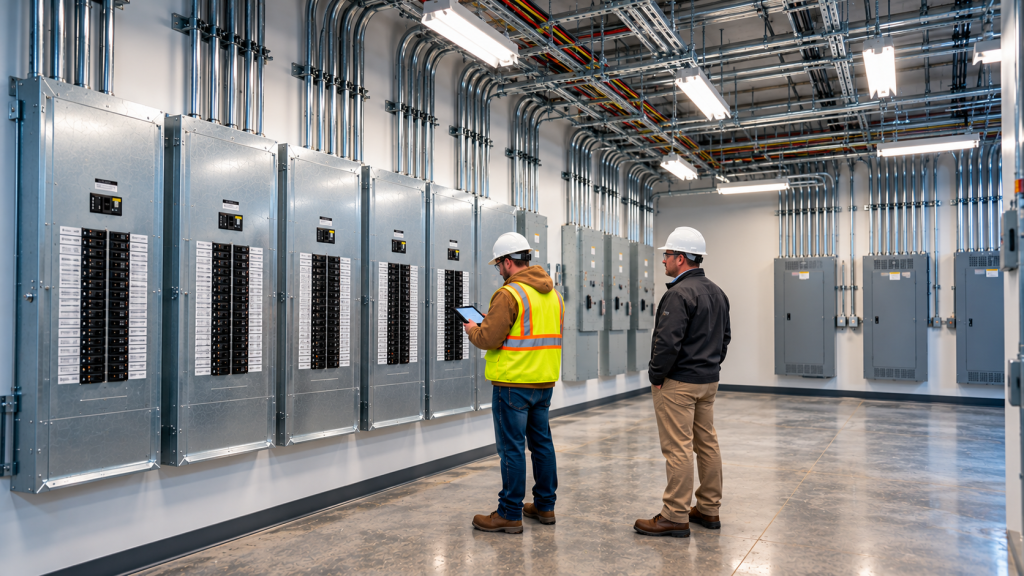
Next comes the final inspection. The inspector reviews completed work, panel labels, and equipment connections. Meanwhile, fire alarm systems often need a separate inspection and test.
If the project includes a new or upgraded service, SDG&E must also complete its work. That may include setting meters or connecting new equipment. Once all approvals are in place, the building can be energized and occupied.
Phase 10: Closeout and Documentation
Finally, the contractor hands over closeout documents. These include as-built drawings, panel schedules, test reports, warranties, and equipment manuals. Owners should also receive training on lighting controls and emergency shutoffs.
Keep these records in a safe place. They make future maintenance, repairs, and upgrades much faster and cheaper.
Coastal Details in Commercial Electrical Installation for San Diego
Location changes the materials list. Near the ocean, salt air attacks standard steel boxes, fittings, and fixtures. As a result, coastal commercial electrical installation in San Diego often calls for stainless steel, fiberglass, or coated parts for anything outdoors.
Rooftop equipment needs special care, too. For example, disconnects and conduit on roofs face sun, wind, and salt at the same time. So designers often specify sealed enclosures and drip loops, and they keep penetrations to a minimum. Likewise, parking lot poles and wall packs benefit from marine-grade finishes.
Inland projects face different issues. In East County and the North County inland valleys, summer heat runs higher. Therefore, equipment rooms may need better ventilation, and conductors may need sizing for warmer air.
Either way, it pays to discuss site conditions during design. A team that handles commercial electrical installation in San Diego every week will know which details hold up and which ones fail early. Consequently, small choices made at the start can prevent years of repairs later.
How Long Does Commercial Electrical Installation in San Diego Take?
Timelines vary by project size and complexity. A small office suite may need only a few weeks of field work. In contrast, a new building or a large lab may take many months. Permit review and equipment lead times often add more time than the installation itself.
To keep schedules on track, involve your electrical team early, approve submittals quickly, and order long-lead items as soon as possible.
Common Questions
Can installation start before permits are issued? Generally, no. Starting without a permit risks fines and rework.
Who prepares the Title 24 forms? Usually the engineer or design-build contractor. Your installer then follows those designs and supports acceptance testing.
What should I do with closeout documents? Store them digitally and in print. Share them with your facility team and any future contractors.
Start Your Installation on Solid Ground
A clear, phased process leads to safer systems and fewer surprises. To learn more about our approach, explore our commercial build-out electrical services. When you are ready, contact our team to discuss your project timeline.