San Jose sits at the heart of Silicon Valley. Its commercial buildings house software teams, hardware labs, research centers, and server rooms. These tenants need more than standard office power. They need reliable circuits, clean power, flexible layouts, and plenty of data capacity. That is why San Jose commercial electricians who understand technology tenants are in high demand. This article explains what tech and R&D spaces need, how utilities affect timing, and how to plan a successful build-out.
What Tech Tenants Expect From San Jose Commercial Electricians
Technology companies rely on power for almost everything. For example, developers need dependable outlets at every desk. Similarly, hardware teams need bench power for testing equipment. Meanwhile, server and network rooms need dedicated circuits, cooling, and often backup power.
Flexibility matters too. Teams grow, shrink, and reorganize often. As a result, tech offices benefit from power and data systems that can adapt without major rework. Skilled San Jose commercial electricians plan for that change from the start.
Office Spaces for Modern Teams
Today’s tech offices mix open workspaces, focus rooms, meeting spaces, and lounges. Naturally, each area needs different power. For instance, open areas often use floor boxes, power poles, or furniture feeds. Conference rooms need video equipment, displays, and outlets at the table.
Lighting is also important. Title 24 rules require efficient fixtures and automatic controls. Many companies also choose tunable lighting to support comfort and focus. For more on this topic, visit our page on commercial lighting and controls.
Hardware Labs and R&D Spaces
Hardware and research labs bring heavier, more specialized needs. For example, test benches may require multiple voltages. Likewise, some equipment needs dedicated circuits or isolated grounding. In addition, labs often need compressed air, exhaust, and other systems that require electrical connections.
Because lab equipment changes frequently, flexible power distribution is valuable. Overhead busway, for example, allows teams to plug in new equipment without rewiring. Planning spare capacity also helps labs grow without constant upgrades.
Server Rooms Built by San Jose Commercial Electricians
Even companies that use cloud services still need on-site network rooms. Typically, these spaces house switches, routers, and sometimes servers. They need dedicated circuits, proper cooling, and protection from power problems.
Many tech tenants add uninterruptible power supplies to keep network gear running during brief outages. Larger server rooms, meanwhile, may need generator backup. In addition, grounding and surge protection help protect sensitive equipment. San Jose commercial electricians work with IT teams to size these systems correctly.
Data Cabling and Low-Voltage Systems
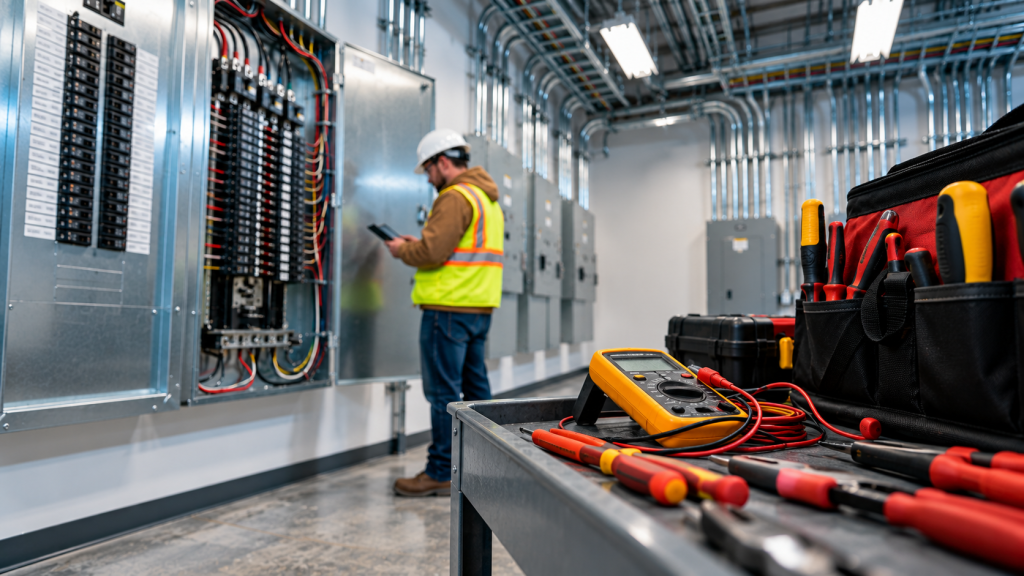
Network cabling is the backbone of any tech office. After all, every desk, conference room, and wireless access point needs a connection. Security cameras, access control, and audio-visual systems add even more cabling.
Good low-voltage design separates data from power, uses proper pathways, and labels every cable. Many tech tenants prefer one contractor for both power and data, so one team owns the entire pathway plan. Learn more on our low-voltage and data cabling page.
PG&E or Silicon Valley Power?
Notably, utility service varies across the South Bay. Most of San Jose is served by PG&E. However, the neighboring city of Santa Clara has its own municipal utility, Silicon Valley Power. Palo Alto also runs its own electric utility.
Therefore, the choice matters for service upgrades, new meters, and planned outages. Each utility has its own process and timeline. Because service upgrades can take months, San Jose commercial electricians should identify the utility and start coordination early.
Permits for San Jose Commercial Electricians
The City of San Jose handles commercial permits through its planning and building department. Simple projects may qualify for faster review. Larger tenant improvements usually go through full plan review. You can find current requirements on the City of San Jose website.
Neighboring cities, including Santa Clara, Sunnyvale, Mountain View, and Milpitas, run their own building departments. A contractor who works across the South Bay will know these differences and prepare submittals accordingly.
EV Charging for Tech Campuses
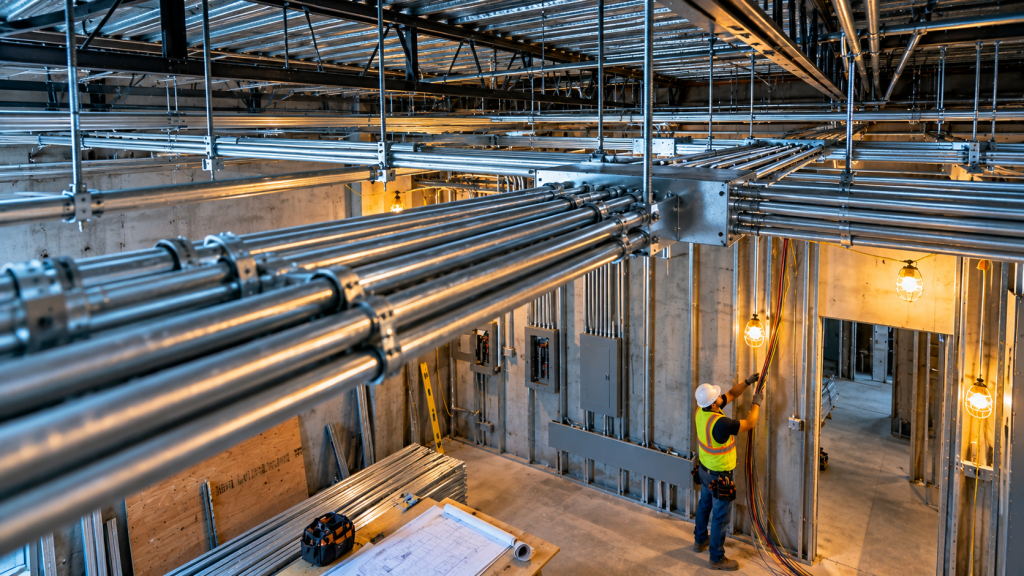
Electric vehicles are common in Silicon Valley. As a result, many tech employees expect charging at work. In addition, California’s green building code requires EV-ready or EV-capable spaces in new and some altered parking areas.
Planning for EV charging starts with a load study. Load management systems can share power among chargers, reducing the need for costly service upgrades. Installing conduit for future chargers while trenches are open saves money later.
Budget Tips From San Jose Commercial Electricians
Tech build-outs can get expensive fast. However, a few smart choices keep costs in check. First, settle the layout before design starts. Moving desks and rooms after drawings are done leads to change orders.
Second, reuse what works. Many second-generation offices in North San Jose already have good panels and lighting. So ask your electrician which parts can stay. Reusing even part of the system can save a lot.
Third, plan for growth without overbuilding. For example, install conduit and spare panel space now, but add circuits only when needed. That way, you avoid paying for capacity you may never use.
Finally, ask about rebates. PG&E and Silicon Valley Power both offer programs for efficient lighting and controls at times. In short, experienced San Jose commercial electricians can point you to savings that make a real dent in the total budget.
How San Jose Commercial Electricians Keep Projects on Schedule
Tech tenants often want to move in quickly. To keep schedules tight, experienced teams take several steps:
- Survey the space before the lease is signed.
- Gather equipment and IT requirements early.
- Order long-lead gear, such as panels and UPS units, as soon as possible.
- Coordinate closely with IT, AV, and furniture vendors.
- Plan Title 24 acceptance testing before the final inspection.
These steps reduce surprises and help tenants open on time.
Choosing the Right Contractor
Look for a licensed C-10 contractor with experience in tech offices, labs, and server rooms. Ask for references from similar tenants. In addition, confirm they can handle both power and low-voltage work.
Communication matters as well. Tech companies move fast, and you want a contractor who responds quickly and keeps you informed.
Frequently Asked Questions
Do tech offices need more power than traditional offices? Often, yes, especially if they include labs or server rooms.
Should I add backup power? It depends on your operations. Many companies use UPS units for network gear and add generators only for critical systems.
Can my space be reconfigured later? Yes, if the original design includes flexible power and data systems.
How early should IT and electrical teams meet? As early as possible. Ideally, they meet before the layout is final, so network rooms, racks, and desk power line up from the start.
Do labs need special permits? Sometimes. Depending on the materials used, a lab may need fire department review or hazardous materials permits. Your design team can confirm this early.
What is the best way to avoid change orders? Lock in the layout and equipment list before drawings go out. In addition, review the drawings with your electrician, IT lead, and furniture vendor together.
Power Your Next Tech Space
The right electrical partner helps your team work faster and grow with confidence. Visit our Bay Area electrical tenant improvement page to learn more about our work. Then contact our team to plan your space.