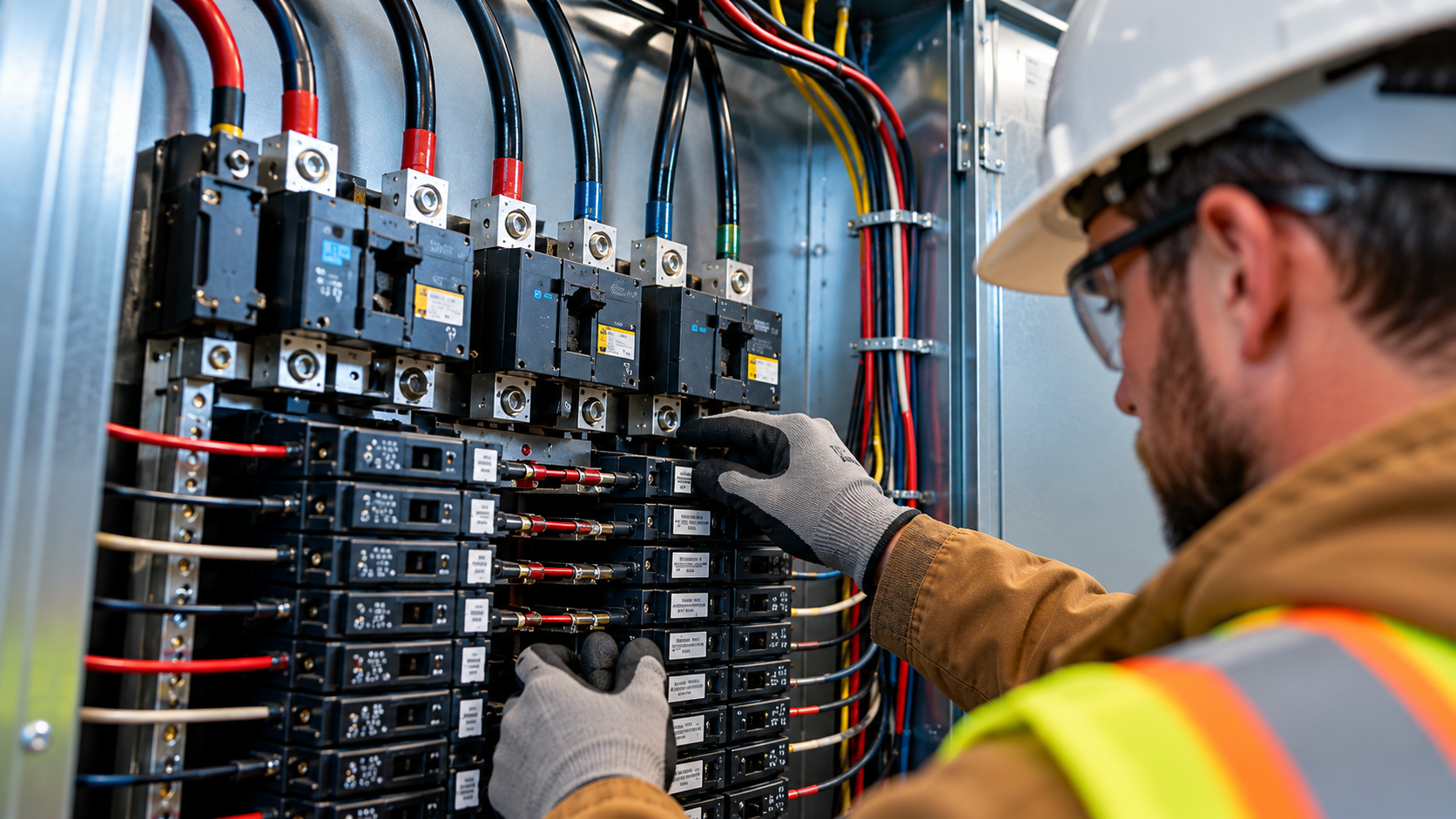
Your electrical panel is the heart of your building. When it runs out of room, everything else slows down. New tenants cannot add equipment, chargers cannot go in, and breakers trip during busy hours. A well-planned Los Angeles commercial panel upgrade solves these problems and prepares your property for the future. This guide explains when an upgrade makes sense, how the process works, and how to keep your business running during the work.
Signs You Need a Los Angeles Commercial Panel Upgrade
Some signs are obvious. Others, however, are easy to miss. Watch for these common warnings:
- Breakers trip often, especially when HVAC or kitchen equipment starts.
- The panel has no open spaces for new circuits.
- Panel covers feel warm, or you notice a burning smell.
- The equipment is decades old or uses a brand with known problems.
- You plan to add EV chargers, heat pumps, or electric kitchen gear.
Any one of these is reason to call a licensed electrician. Two or more usually point to a Los Angeles commercial panel upgrade in the near future.
Los Angeles Panel Upgrade Versus Service Upgrade
At first, these terms can seem the same. A panel upgrade replaces or adds distribution panels inside the building. It gives you more breaker spaces and better protection. However, it does not always add more power from the utility.
A service upgrade increases the total power your building can draw. In most cases, it involves new switchgear, a larger main breaker, and work by the utility. Many projects need both. Your electrician will explain which one fits your needs after a load study.
Step 1: The Load Study
First, every upgrade starts with data. A load study measures how much power your building uses today. Some electricians use utility billing data. Others, instead, install meters that record demand over 30 days.
Next, the team adds the expected new loads. For example, these might include chargers, kitchen gear, or HVAC changes. The result shows whether your existing service can handle the change. It also helps the engineer, so they can size new panels and feeders correctly.
Step 2: Design and Engineering
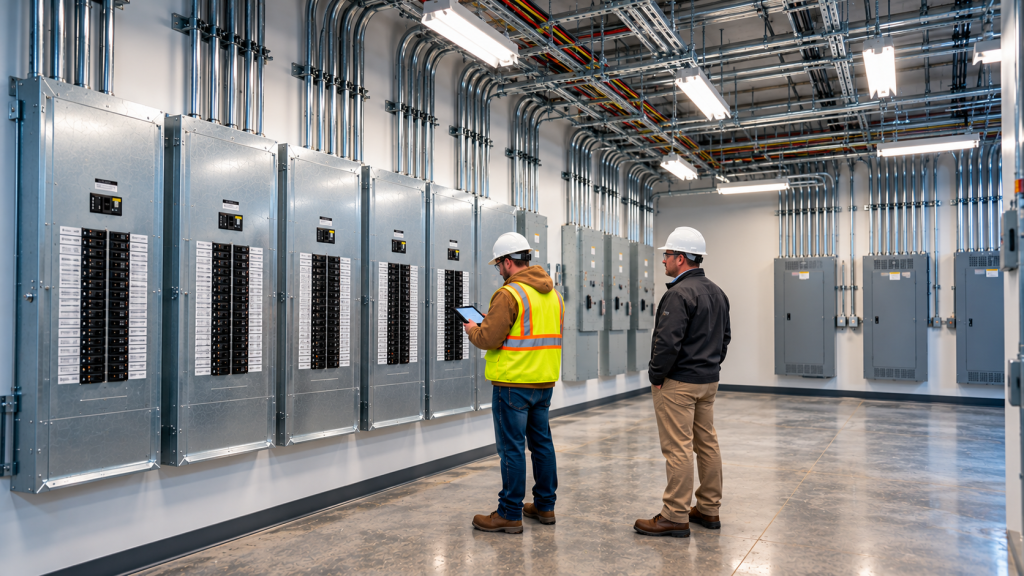
With load data in hand, the engineer designs the new system. Drawings show panel locations, feeder sizes, breaker ratings, and grounding. They also include seismic anchoring details, which are essential in Southern California.
In addition, good design looks ahead. Leaving spare capacity and empty breaker spaces in a Los Angeles commercial panel upgrade costs little today. Yet it can save a lot when the next tenant moves in. For more on this topic, see our page on commercial electrical service upgrades.
Step 3: Utility Coordination With LADWP or SCE
If your project increases service size, the utility gets involved. Inside the City of Los Angeles, that usually means the Los Angeles Department of Water and Power. Many surrounding cities rely on Southern California Edison instead.
The utility reviews your load request, checks its transformer capacity, and sets requirements for metering. In some cases, it must upgrade its own equipment first. This process can take several months. As a result, utility coordination should start as early as possible in any Los Angeles commercial panel upgrade.
Step 4: Permits and Plan Review
Panel and service upgrades require permits. In the City of Los Angeles, the Department of Building and Safety handles review and inspection. Larger upgrades usually need stamped drawings and plan check.
Some cities nearby run their own building departments. Since each has its own process, local experience helps. A local contractor will know these steps and handle the paperwork for you.
Step 5: Ordering Equipment
Lead times for electrical gear have been long in recent years. Switchgear and large transformers may take many months to arrive. Similarly, even standard panels can see delays during busy periods.
Because of this, order equipment as soon as drawings are approved. Some owners even release orders early based on preliminary designs. Your contractor should give you current lead times during bidding, not after you sign.
Planning Shutdowns for a Los Angeles Commercial Panel Upgrade
Most upgrades require at least one power shutdown. For many businesses, that is therefore the hardest part. Careful planning keeps disruption to a minimum.
- Schedule wisely: Plan shutdowns for nights, weekends, or slow periods.
- Notify tenants: Give clear notice of the date, time, and expected duration.
- Use temporary power: Rent generators for critical loads such as refrigeration or servers.
- Prepare in advance: Complete as much work as possible before the shutdown starts.
- Have a backup plan: Know what happens if the work runs long.
With good planning, many shutdowns for a Los Angeles commercial panel upgrade last only a few hours.
Step 6: Installation and Testing
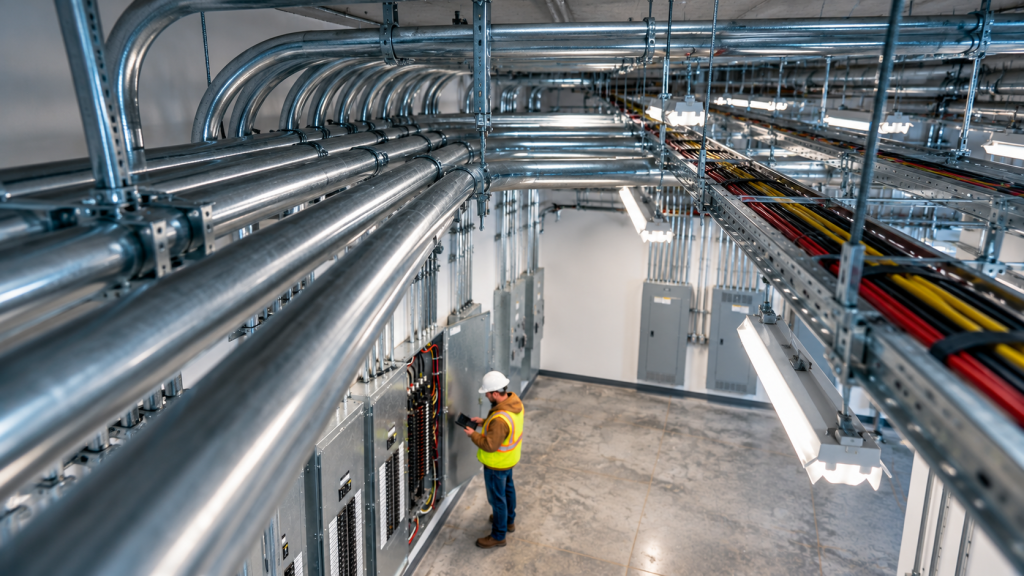
On installation day, crews remove the old equipment and install the new panels or switchgear. Next, they anchor everything to meet seismic rules, connect feeders, and label each circuit. Then they test insulation, torque connections, and verify phase rotation.
After testing, the inspector reviews the work. Once approved, the utility may need to set a new meter or reconnect service. Finally, power is restored and loads are brought back online one at a time.
What Drives Los Angeles Panel Upgrade Costs?
Every Los Angeles commercial panel upgrade has a different price. The biggest factors include:
- The size and type of new equipment.
- Whether the utility service must also increase.
- The distance between the service and new panels.
- Access, wall repairs, and after-hours labor.
- Seismic anchoring, permits, and engineering fees.
A detailed scope and a written estimate are the best way to compare bids. Ask each contractor to list what is included and what is excluded.
Choosing the Right Contractor
First, look for a licensed C-10 contractor with real experience in commercial service work. Ask how many panel and switchgear projects they have completed in the past year. In addition, ask how they handle utility coordination and shutdown planning. Confirm insurance, and request references from similar projects. Also ask whether the firm has worked with your specific utility before. A contractor who knows the utility’s planners and paperwork can shave weeks off the schedule. Finally, ask for a sample shutdown plan from a past job, so you can see how carefully they prepare.
Los Angeles Commercial Panel Upgrade FAQs
How long does the shutdown usually last? Many panel swaps need only a few hours of downtime, especially when crews prepare in advance. However, larger switchgear changes may need a full night or a weekend.
Can I keep my business open during the upgrade? In many cases, yes. Most of the work happens while power stays on. Then the actual cutover happens during a short, planned shutdown, often supported by temporary generators.
Will a new panel lower my energy bill? Not directly, because panels distribute power rather than use it. Still, a new panel makes room for efficient equipment, such as LED lighting and heat pumps, which do lower bills.
How do I know if my building has an unsafe panel brand? A licensed electrician can identify the make and age during a site visit. If the brand has a poor safety history, they will usually recommend replacement rather than repair.
Power Your Building for the Future
A modern panel gives your building room to grow. It improves safety and supports new technology, from EV chargers to electric kitchens. To learn more about our local work, visit our Los Angeles electrical tenant improvement page. You can also read our post on panel capacity for build-outs. When you are ready, contact our team to schedule a load study.